


!
Rust-Prone Areas
Wheel arches, sills and lower seams repeatedly meet water, debris and road contamination.


Couldn't load pickup availability


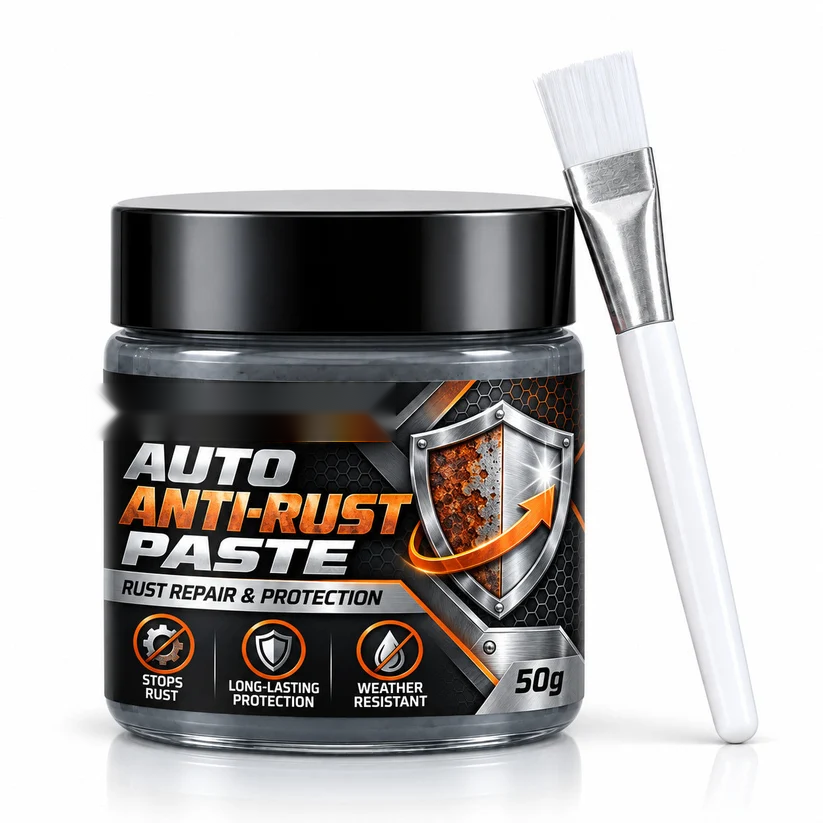
Treat light surface rust, cover prepared exposed metal and add a protective barrier to the spots that face moisture, road grime and everyday weather.


Rust often begins along edges, seams and exposed metal. Moisture and contamination can keep the corrosion process moving if the surface is left untreated.
Wheel arches, sills and lower seams repeatedly meet water, debris and road contamination.

Corrosion can continue around damaged coating edges even when the visible spot still looks small.

Cleaning alone does not protect prepared metal from renewed environmental exposure.

More extensive corrosion usually means more preparation, more materials and more repair work.

More than a simple touch-up: the paste is designed to work as part of a basic rust-care process for compatible automotive metal that has been properly cleaned and prepared.

Designed primarily for prepared light surface rust and oxidation.

Coats exposed compatible metal to reduce direct contact with moisture and everyday contaminants.

Leaves a cured protective layer over the treated area after proper surface preparation and drying.
The product page specifies a broad operating temperature range after curing, supporting year-round use across common cold and hot weather conditions.

Designed to remain protective after curing in freezing seasonal conditions.

Designed for stable surface protection during warmer driving and storage conditions.
The thick paste format makes localized coating easier to control around vertical panels, seams, corners and other small metal areas where a runny liquid can be harder to manage.
 Precise Coating · Cleaner Application
Surface preparation is important. Remove contamination and loose corrosion before applying an even layer to the target metal area.

Remove dirt, grease, moisture and any loose or flaking rust from the target area.

Coat the prepared compatible metal with an even, controlled layer over the affected spot.

Leave the coating undisturbed for approximately 2–4 hours, depending on local conditions.
Use on compatible, accessible automotive metal surfaces that need localized rust treatment and protective coverage.


Focus the coating only on properly prepared compatible metal. Avoid moving components, braking surfaces, hot exhaust components and any surface where a coating could interfere with safe operation.

Key product information for checking whether it suits your intended automotive surface-care task.
Keep the post-purchase reassurance section consistent with the rest of your store while the purchasing controls themselves remain outside this Custom Liquid block.
If the product does not meet expectations, follow your store's published return and refund policy within the applicable period.
Give customers a clear support channel for product questions, order assistance and after-sales help.
A compact brush-on format designed around straightforward DIY automotive surface care and precise coverage.
Here are the key usage points customers usually want to understand before applying a rust-care coating.
Usually not for accessible compatible metal. Clean and prepare the target area while it is accessible on the vehicle, then brush the paste directly onto the prepared spot.
It is intended mainly for light surface rust and oxidation plus protective coating. Loose, thick or heavily flaking rust should be mechanically removed before application.
Allow roughly 2–4 hours. Temperature, humidity, surface condition and the thickness of the applied layer can affect actual curing time.
Typical compatible areas include wheel arches, door edges, seams, sills and accessible chassis metal. Do not coat braking surfaces, moving parts or areas where coating could interfere with vehicle safety.
Remove dirt, grease, moisture and loose corrosion. Make sure the target surface is stable, clean and dry before applying the paste.
No. This is for surface care and protective coating, not structural metal repair. Perforated, weakened or load-bearing vehicle components should be inspected by a qualified repair professional.
Inspect rust-prone areas regularly, prepare exposed metal correctly and use targeted protection before a small surface issue becomes a much bigger job.